The Badge Outlives the Booth: Making Exhibition Short Links Last Past Teardown
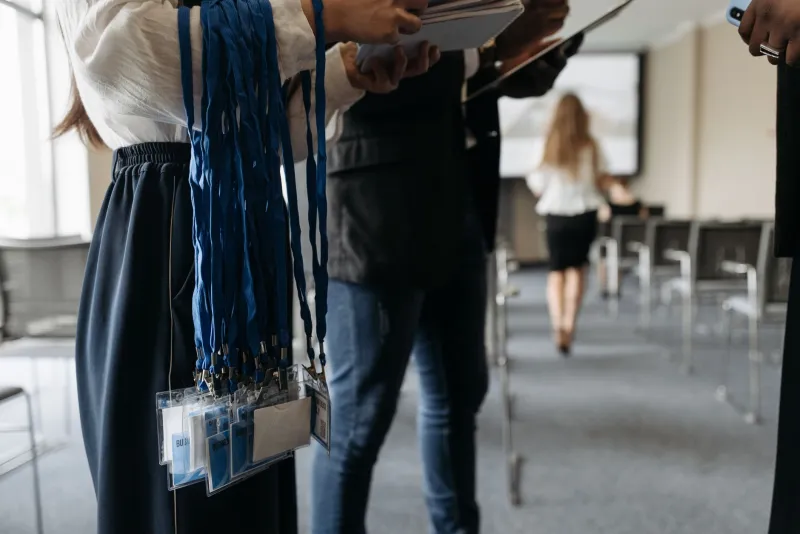
Exhibition links have a habit of outliving the event. A delegate leaves with a lanyard, a printed stand guide gets slipped into a laptop bag, and a QR code on a banner sits in someone’s camera roll for weeks. By the time your team has packed the crates, that short URL may still be doing a job you never planned for.
That is not a reason to panic. It is a reason to treat exhibition links as small pieces of infrastructure rather than disposable campaign URLs. If you are at the NEC, Olympia, ExCeL or a regional conference centre, the same rule applies: print once, route carefully, and keep the route alive after the doors close.
One Show, Several Journeys
The first mistake is using a single short link across everything. It feels tidy on a planning spreadsheet, but it flattens the story. A lanyard link, a stand sign, a speaker slide and a follow-up email are not the same touchpoint. They happen in different contexts and deserve separate routes.
You do not need dozens of links. A simple matrix is enough:
- one route for lanyards and badges
- one for stand signage and demo screens
- one for printed show guides or floor-plan ads
- one for speaker slides and session handouts
- one for the follow-up email
Use readable paths if your short domain allows it: /lanyard, /stand, /guide, /slides, /follow-up. A delegate who sees the link in print should be able to type it without holding a magnifying glass. That is not just a courtesy; it reduces support questions and makes the link easier to audit later.
Build for the Pockets, Not Just the Hall
A link printed on a lanyard has a strange life. It gets scanned at the stand, then maybe again on the train home, then again when someone is clearing out their bag a fortnight later. Your redirect should still make sense at each point.
During the show, send people to the live stand page: what is being demoed, where to book a follow-up, who to ask for. After the show, do not leave that page frozen in time. Move the route to a post-event page with the useful leftovers: slides, a contact form, a short recap, a link to book a call. The short URL stays the same; the destination matures.
This is where temporary redirects earn their keep. A short link platform can often issue a temporary redirect while the event is live and switch the destination afterwards. If you are relying on a plain 301, check how your platform handles changes before you print anything. The goal is a stable public link with a destination you can edit without reprinting a single badge.
Measure the Asset, Not the Crowd
Exhibition measurement gets muddy fast. Badge scanners, venue Wi-Fi, shared iPads and a hundred people scanning the same stand QR code can all blur together. Short links will not give you a census of the hall. They can, however, tell you which printed asset prompted a click.
Keep the attribution simple. Give each asset its own short path or a distinct campaign parameter at the destination. Then compare like with like: lanyard clicks against stand-sign clicks, not lanyard clicks against total footfall. A lanyard may generate fewer clicks but better-quality follow-ups because it travels home with the delegate. A stand sign may spike during busy periods and tell you more about queue behaviour than intent.
Be cautious with percentages. If the stand QR code is visible to everyone who walks past, a low click count may simply mean the hall was quiet or the sign was facing the wrong way. Use the numbers to ask better questions, not to declare a winner by lunchtime on day one.
The Post-Show Redirect Is Part of the Campaign
When the stand comes down, the link should not become a digital dead end. Delegates still have the lanyard. They may open it when they are back at their desk, when a colleague asks what they saw, or when they are sorting out expenses.
Plan the after-show destination before the event starts. A good post-show route might include:
- a short thank-you and recap
- the deck or demo video you promised
- a named contact or team inbox
- a booking link for a proper conversation
- a clear route back to your main site
If the event has a follow-up offer with a deadline, state it plainly. If there is no deadline, do not invent urgency. A calm, useful page beats a fake countdown clock every time.
Audit Before You Print
Print deadlines are unforgiving. Before the artwork goes to the printer, run a short link audit with the same seriousness as a print proof. Check every URL on every asset: lanyard, badge, stand board, banner, flyer, slide, email footer. Confirm the destination loads on a phone, not just a laptop. Check the QR code from a distance and at an angle. Make sure the short domain is the one you actually control, not a lookalike a supplier used by accident.
Write down the redirect map. Include the asset, the short path, the intended destination, who owns it and when it should change. That document is boring right up until the moment someone asks why the lanyard link is pointing at last season’s brochure.
Keep the Route Warm
After the event, resist the urge to switch everything off. Keep the main show route alive for at least a few weeks, then decide whether it should become a permanent post-show page, a redirect to a relevant service page, or a quiet archive. If you do retire it, replace it with something human: a short note and a route to the right place, not a bare 404.
The exhibition hall is temporary. The lanyard in someone’s pocket is not. Treat the short link as part of the take-home pack and it will keep earning its keep long after the stand has gone.