Pressure Test: Running a Black Friday Redirect Drill for Your 2026 UK Retail Links
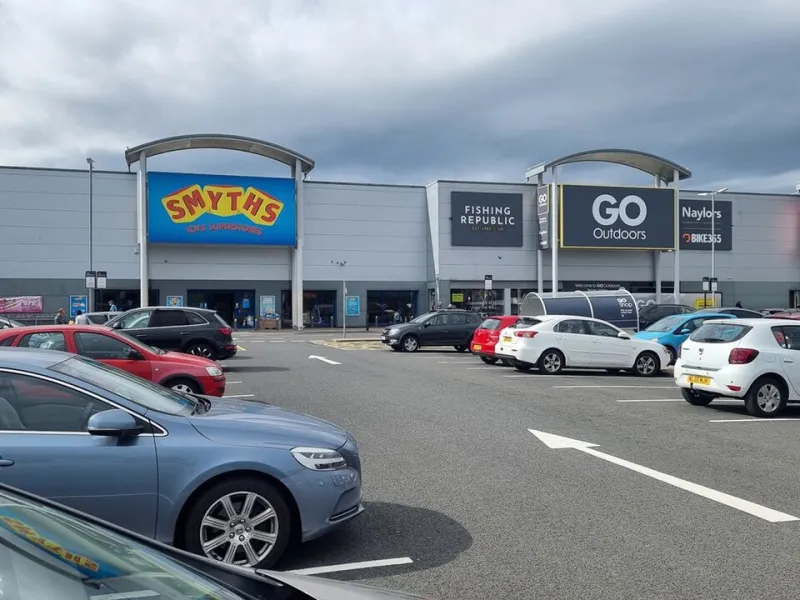
Photo: Oliver Dixon , CC BY-SA 2.0, via Wikimedia Commons
Black Friday has a way of making a healthy link stack look fragile. Traffic spikes, discount codes change at short notice, landing pages get swapped, and suddenly everyone remembers that the short link in the email is the only thing standing between a customer and the checkout.
For UK retailers, the run-up to Black Friday 2026 is the right time to stop treating links as set-and-forget. A link that works on a quiet Tuesday in October is not necessarily campaign-ready under pressure. The difference is a drill.
What a redirect drill actually tests
A redirect drill is a rehearsal. You simulate the conditions of Black Friday — high traffic, last-minute changes, fallback pages — and see how your short links behave. It’s not about breaking things for fun. It’s about finding the weak points before your customers do.
Start with your most important links: the ones in the Black Friday email, the paid social ads, the homepage banner, the click-and-collect page and the app. These are the links that will take the most clicks. They deserve a stress test.
Pre-event: the two-week checklist
Two weeks out, trace every campaign link end to end. Use a redirect checker and do it on a mobile connection, not just office Wi-Fi. Check the final destination, the tracking parameters and the page speed. If a link goes through three redirects, flatten it now.
Next, check your fallbacks. What happens if a product page goes out of stock or a landing page is unpublished? Does the link 404, or does it land on a sensible alternative? For a retail campaign, a graceful fallback might be a category page with a clear message, not a generic error.
Then test your short link platform. Can it handle a spike? If you’re using a shared shortener, check the rate limits. If you’re self-hosting, check the server. A link shortener that falls over on Black Friday is a expensive way to learn about capacity planning.
Real-time monitoring: what to watch
On the day, you need a dashboard, not a hunch. Watch click volume, redirect latency and error rates. If a link starts returning 5xx errors, you want to know before social media does.
Set up alerts for unusual patterns. A sudden drop in clicks on a high-traffic link can mean the link is broken, the landing page is down, or the campaign has been paused. A sudden spike in 404s means a destination has moved. Either way, you need a human to check.
Keep a simple runbook. Who updates the short link if the destination changes? Who talks to the platform if there’s an outage? Who signs off a fallback page? On Black Friday, decisions happen fast. A runbook stops the panic.
Graceful failure pages
Not every failure is avoidable. Servers go down. Pages get unpublished. The question is what the customer sees. A raw 404 is a dead end. A branded fallback page with a clear message and a route back to the shop is a second chance.
For UK retailers, a good fallback page might say: “This offer is popular — here are similar deals” and link to a category page. It should load fast, work on mobile and not rely on the same infrastructure that just failed. If your fallback page is hosted on the same server as your main site, it’s not really a fallback.
Test the fallback by deliberately pointing a test short link at a broken destination. See what happens. If it’s ugly, fix it before the real traffic arrives.
Last-minute changes
Black Friday always brings last-minute changes. A discount code changes. A product sells out. A landing page gets replaced. When that happens, update the short link’s destination, not the link itself. That way, every email, ad and QR code already in circulation keeps working.
This is the operational advantage of owning your short links. You can redirect a live campaign in minutes without reprinting anything or asking a platform to help. Use it.
Post-sale cleanup
When the sale ends, the links don’t automatically stop. People will click old Black Friday links for weeks. Decide what they should see. A “this sale has ended” page with a link to current offers is better than a 404. Update the short link to point there.
Then retire the campaign links you no longer need. Keep a record of what was used, where it pointed and when it ended. Next year’s drill starts with this year’s notes.
Live versus campaign-ready
A link that is technically live is not necessarily campaign-ready. Campaign-ready means it has been tested under load, has a fallback, has an owner and has a clean redirect path. It means you know what happens when the traffic spikes and the discount code changes at 9am.
Black Friday 2026 will be a load test whether you plan for it or not. A redirect drill makes sure your links are the least of your problems. And when the traffic hits, that’s exactly where you want them.