Gloves On, Signal Low: Keeping Christmas Market Links Useful in the Cold
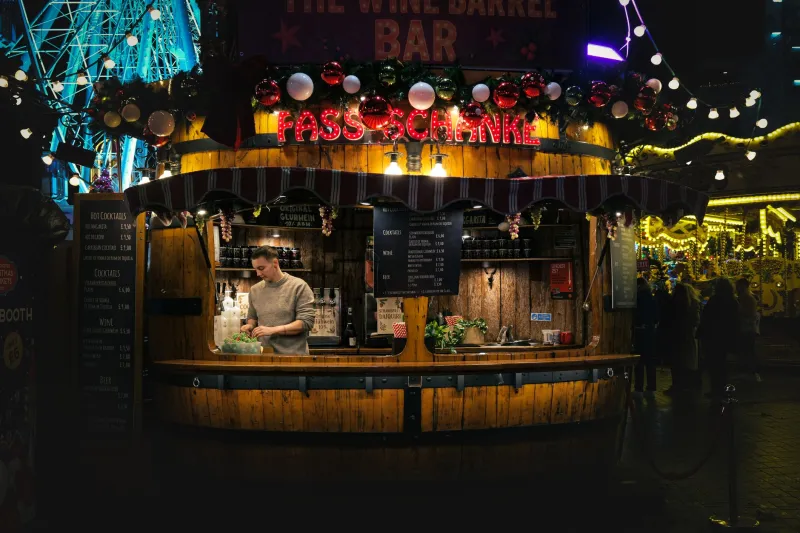
There is a particular moment at every UK Christmas market when a good idea meets reality. It is 5pm, the lights are on, the brass band is halfway through a carol, and someone is trying to scan a QR code while wearing gloves, holding a cup of mulled wine and standing beside a generator that is doing its best to interfere with the mobile signal.
That is the moment to design for. Not the tidy version where everyone has full bars, warm fingers and a spare hand. The real version, where a link has to be quick to find, easy to read and useful before the mince pie goes cold.
For market organisers and stallholders, short links are not about making the festive season feel more corporate. They are about making the small, practical bits work: the stall directory, the allergen note, the opening-hours change, the trader application, the sponsor report. Get those right and the market feels smoother. Get them wrong and people give up, ask a human, or walk away.
Start with the person holding the cup
The first rule is boring and useful: make the link readable at a glance. A short URL under a QR code gives people a fallback if the camera struggles. Something like cuturl.co.uk/stalls is easier to type, say out loud and print on an A-board than a long campaign URL with three question marks in it.
Print the QR code at a sensible size, with high contrast and a bit of quiet space around it. Put it at eye level where possible, not down by someone’s wellies. If the code is on a laminated card at a stall, test it from the sort of distance a person actually stands. If it is on a programme or flyer, test it under indoor lighting as well as string lights.
The same goes for the destination page. It should load fast, work on a cheap Android phone and use large tap targets. A stall directory that requires pinching and zooming is technically online but practically useless when someone is wearing gloves.
One front door, then a sensible number of side doors
A single market hub link is a good starting point. Call it something obvious, point it at a lightweight page with the stall list, opening times, travel notes and a line about allergens, and use that as the main QR code on entrance boards and programmes.
Then give each stall its own short link only where it earns its place. A stallholder who wants to show a full ingredient list, a pre-order form or a “find us at the back by the bandstand” note can have a simple link printed on a small card. That is more useful than expecting every visitor to navigate a giant PDF while standing in a crowd.
Resist the urge to create a QR code for every single thing. Fifty codes on one board is not a directory; it is a quiz. The market hub should do the heavy lifting. Stall-level links should answer a specific question.
Allergens and opening hours need a human backup
A short link is a handy way to publish updated allergen information, but it should never be the only way to get it. Food safety matters more than campaign cleverness. If a stall’s recipe changes or a product contains a new allergen, the printed sign should still say “ask the stallholder” and the digital page should be updated quickly.
This is where redirects earn their keep. If a stall moves from pitch 14 to pitch 22, or opening times shift because of weather, update the destination behind the short link rather than reprinting every leaflet. Keep a simple change log: who changed it, when, and what the new destination is. A market’s link chaos usually starts when three people have login access and nobody knows which link is live.
Attribution without a treasure hunt
Market organisers are often asked to show sponsors what happened. The temptation is to bolt on every tracking parameter known to humanity. Please don’t. A festive market does not need a surveillance maze to prove that people looked at the sponsor page.
Use the short link as the attribution unit. A link printed on the entrance board, one in the programme and one on a stall card can tell you which placement got scans. That is enough for most sponsor conversations. Report scans honestly as scans, not as people, sales or guaranteed attention. If someone scanned the link and then bought a hot chocolate, the link did not buy the hot chocolate.
Keep data collection minimal. If the landing page can be a simple, fast page without unnecessary cookies or forms, so much the better. Count the click, give the sponsor a clear summary and leave the visitor alone. “Top three placements by scans” is a more useful line in a sponsor report than a fog of invented engagement metrics.
Trader applications should survive a noticeboard
A short link is also handy for vendor applications. Put cuturl.co.uk/apply26 on a postcard, in a council newsletter, in a Facebook group for local makers and on the bottom of an email. Point it at a form that works on a phone, states the deadline plainly and explains what happens next.
If the deadline moves, update the page and the redirect note. If you are running separate pitches for food traders and craft stalls, use two clear links rather than one form with a maze of tick boxes. The same principle applies to pitch fees, insurance documents and power requests: short link in, clear information out.
A small checklist for market week
- Test every QR code on mobile data, not just the venue Wi-Fi.
- Put the short URL in plain text under the code.
- Check the landing page on a small phone screen and with large fingers.
- Make one person responsible for link changes, with a shared note of destinations.
- Update redirects after any pitch or time change, then test again.
- Print allergen and safety information in the real world, not just behind a link.
- Keep sponsor reporting to placement-level scans and a short written caveat.
The festive bottom line
A good Christmas market link is not the flashiest thing on the stall. It is the one that works when someone’s gloves are on, the signal is low and the queue is moving. Short links, sensible redirects and a small amount of honest measurement can keep the admin tidy without turning a lovely winter browse into a data-collection exercise. For the 2026 season, aim for useful first, measurable second — and readable always.