Say It Out Loud: Short Links That Survive Radio, Podcasts and a Van Door
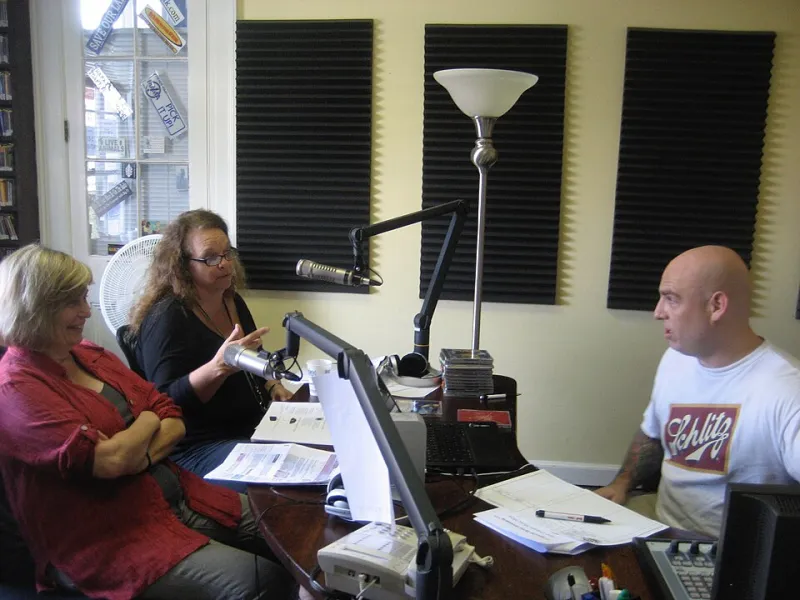
Photo: Infrogmation of New Orleans, CC BY-SA 4.0, via Wikimedia Commons
Most link audits happen on a screen. Someone checks the redirect, squints at the UTM string, confirms the landing page loads and moves on. That is fine for an email button. It is not enough for a link that has to be spoken on commercial radio, read out at the end of a podcast, printed on a van door or passed across a pub table after two drinks.
A spoken link has a different job from a clicked link. It has to be heard once, remembered vaguely and typed correctly by someone who was only half listening. That is a high bar. The good news is that a short URL gives you more control than almost any other campaign asset. You can choose the words, the rhythm and the fallback. You just have to test it with a mouth, not a spreadsheet.
Start with the mouth, not the spreadsheet
The first pass is simple: read the link aloud. Not in your head. Out loud, at normal speaking pace, ideally to someone who has not seen the campaign brief. If they ask you to repeat it, that is data. If they ask how to spell it, that is a warning. If they type the wrong thing, that is a fail.
Do this with three people. One from the campaign team, one from outside it and one who does not share your accent. The last one matters more than UK marketers sometimes admit. A slug that sounds obvious in a London meeting room can wobble in Belfast, Cardiff, Glasgow or rural Norfolk. That is not about correctness. It is about whether the link survives the trip from ear to keyboard.
The three-second spelling test
A spoken link should not require spelling. If the presenter has to say 'that is F for Freddie, O for Orange', you have already lost most of the audience. Use whole words, avoid strings of letters and numbers, and keep the slug short enough to repeat without a breath.
Before and after examples help here:
| Before | After | Why it works better |
|---|---|---|
| cuturl.co.uk/2026-XMAS-50OFF-PROMO | cuturl.co.uk/xmas50 | Fewer characters, no letter-number soup |
| cuturl.co.uk/win-tickets-radio | cuturl.co.uk/tickets | One idea, easy to repeat |
| cuturl.co.uk/leeds-store-open | cuturl.co.uk/leeds | Shorter, still locally relevant |
| cuturl.co.uk/Q4-SALE-25 | cuturl.co.uk/save25 | Says the benefit, not the internal campaign code |
The 'after' versions are not automatically better in every context. 'Xmas' may not suit every brand, and 'tickets' only works if there is one obvious ticket offer. But the principle holds: choose words a listener can hold in their head for five seconds. Internal campaign names, quarter labels and agency shorthand should stay internal.
Watch the homophones and the lookalikes
English is generous with words that sound the same and mean different things. 'Sale' and 'sail' are a classic. 'Free' and 'three' can blur on a bad car radio. 'New' and 'knew' are fine in speech but confusing if someone is trying to reconstruct the spelling. Numbers are worse: zero and oh, one and won, two, to and too, five and hive. Avoid relying on them unless the number is the entire point.
Also check letter shapes. A slug with 'l', 'I' and '1' close together is a typing trap. So is 'O' and '0'. Lowercase helps, but it does not solve everything. If the link will be read aloud, assume nobody is looking at it. The slug has to work as sound first and text second.
Regional pronunciation is part of the audit
Some words are pronounced differently across the UK, and that can affect how people spell what they hear. 'Route' can be 'root' or 'rowt'. 'Scone' can rhyme with 'gone' or 'cone'. Place names such as Leicester, Worcester, Edinburgh and Mousehole are obvious local traps, but they are also useful if the audience is local and knows them. The question is not whether a word is difficult in general. It is whether it is difficult for this audience, on this station, in this podcast.
A practical fix is to record the link as it will be spoken. Play it back to someone who was not in the room. Ask them to type it. If they get it wrong, change the slug or add a clearer fallback. Do not rely on the presenter to explain it. Presenters are busy, and scripts get trimmed.
When the link should not be spoken at all
Radio is a blunt instrument for links. The listener may be driving, cooking or half asleep. If the call to action is complex, use an SMS keyword instead: 'text FESTIVE to 80000' is often kinder than a URL. If the audience is already on their phone, a QR code can work, but only where scanning is natural: a pub table, a poster, a leaflet, a shop window. A QR code on a moving van is mostly decoration. A spoken link on a podcast works best when the host repeats it and the show notes carry the clickable version.
For van livery and outdoor print, treat the short link as a visual asset first. Keep it large, keep it short and do not bury it under three partner logos. For podcasts, give the host a line they can say naturally, not a URL read at machine speed. For word of mouth, the link has to be simple enough to text to a friend without looking it up.
A five-minute spoken-link audit
Before the campaign goes live, run this check:
- Read the full link aloud at normal pace.
- Ask two people to type it without seeing it.
- Check for homophones, numbers and lookalike characters.
- Test the link with someone outside your regional accent.
- Confirm the branded domain is the one people expect.
- Open the link on a phone with poor signal.
- Check that the landing page repeats the offer in plain English.
- Add a QR code or SMS keyword where the context needs a fallback.
- Keep the slug live for as long as the campaign is likely to be remembered, not just until the media buy ends.
None of this takes long. It just needs to happen before the script is recorded, not after the first listener complains that the link does not work. In 2026, attention is short and links are cheap. The spoken-link test is how you stop a cheap link from becoming an expensive misunderstanding.